

When Should You Visit Urgent Care for Lower Abdominal Pain?
If you are suffering from persistent or worsening lower abdominal discomfort, nausea, vomiting, fever, painful urination, diarrhea, or unusual abdominal tenderness, you may need timely medical evaluation. Lower abdominal pain can be associated with digestive concerns, urinary problems, infections, or other health conditions. Our medical team at UCare Urgent Care can assess your symptoms, perform a physical examination, and recommend appropriate testing or treatment based on your individual needs. For more information, contact us today! We are conveniently located on North Zaragoza Rd. in El Paso, TX, and on Lee Trevino Dr. in El Paso, TX.
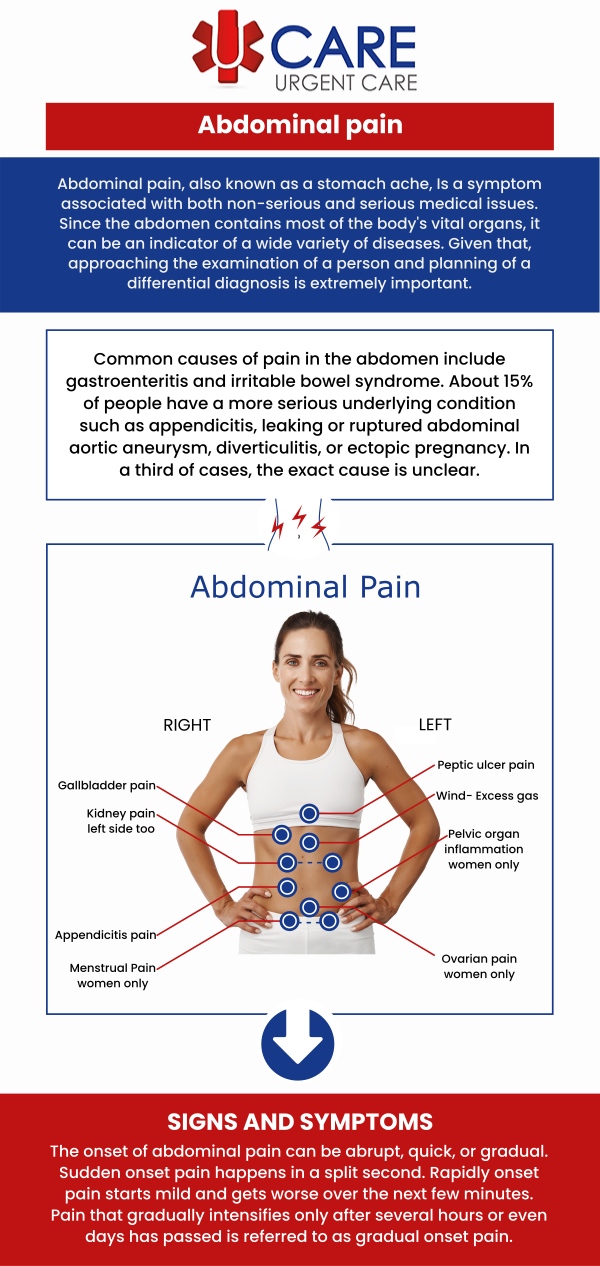
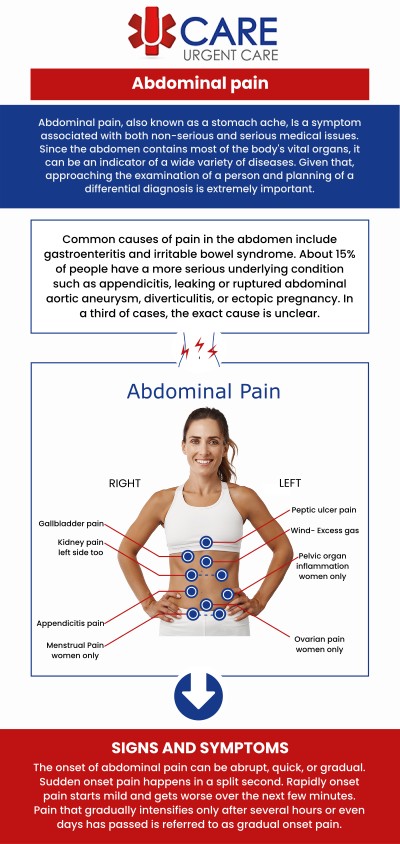
Table of Contents:
When should lower abdominal pain be a concern?
How do doctors diagnose lower abdominal pain?
When should you seek medical care for lower abdominal pain?
How is lower abdominal pain treated?
How can a healthcare provider help identify the cause of lower abdominal pain in El Paso, TX?
Lower abdominal pain should be a concern when it is severe, persistent, worsening, or accompanied by symptoms that may indicate an infection or another condition requiring medical evaluation. Seek medical attention when you experience:
• Sudden or intense lower abdominal pain
• Pain that continues, worsens, or repeatedly returns
• Fever, chills, weakness, or dizziness
• Persistent nausea or repeated vomiting
• Blood in the urine or stool
• Painful, difficult, or unusually frequent urination
• Ongoing constipation, diarrhea, or abdominal swelling
• Unusual vaginal bleeding or discharge
• Pain that moves to the lower-right side of the abdomen
• Lower abdominal pain during pregnancy
• Unexplained appetite loss or weight loss
• Severe tenderness or a hard, rigid abdomen
Our medical team at UCare Urgent Care can evaluate persistent or concerning lower abdominal pain, review accompanying symptoms, perform an examination, and recommend appropriate testing or treatment.
Doctors diagnose lower abdominal pain by reviewing the patient’s symptoms and medical history. They may ask when the pain began, where it is located, whether it spreads to another area, how severe it feels, and what makes it better or worse. The doctor will also check for related symptoms such as fever, nausea, vomiting, constipation, diarrhea, painful urination, blood in the stool or urine, or unusual vaginal bleeding.
During a physical examination, the doctor may gently press different areas of the abdomen to identify tenderness, swelling, muscle guarding, or a specific location of pain. Depending on the symptoms and examination findings, X-rays may be recommended to help identify digestive, urinary, reproductive, or infectious causes.
At UCare Urgent Care, our medical team evaluates lower abdominal pain by combining a detailed symptom review with a focused physical examination and appropriate testing when available. Based on the findings, we may recommend treatment, continued monitoring, or referral to an emergency department or specialist when more advanced evaluation is necessary.
You should seek medical care for lower abdominal pain when the discomfort is persistent, worsening, or accompanied by symptoms that may indicate an infection or another condition requiring evaluation. Timely medical attention can help identify the possible cause and determine whether testing, treatment, or a higher level of care is needed.
Seek medical care if you experience:
• Pain that continues for several hours or keeps returning
• Moderate to severe pain that is becoming worse
• Fever, chills, nausea, or repeated vomiting
• Painful or frequent urination
• Blood in the urine or stool
• Ongoing diarrhea or constipation
• Unusual vaginal bleeding or discharge
• Abdominal swelling, tenderness, or difficulty moving comfortably
• Loss of appetite, weakness, or unexplained weight loss
• Lower abdominal pain during pregnancy
At UCare Urgent Care, we can evaluate lower abdominal pain by reviewing your symptoms, performing a physical examination, and recommending appropriate testing or treatment. When symptoms suggest a more serious condition, the team can direct you to emergency or specialty care for further evaluation.
Lower abdominal pain is treated according to its underlying cause, severity, and accompanying symptoms. A healthcare provider may review the patient’s medical history, examine the abdomen, and recommend urine testing, laboratory work, or imaging when necessary. Treatment may involve hydration, dietary changes, rest, symptom management, or targeted care for digestive, urinary, or infectious conditions.
The provider may also offer guidance for monitoring symptoms and arrange follow-up care when the condition requires continued evaluation. Severe or rapidly worsening pain, persistent vomiting, fever, blood in the stool, abdominal swelling, fainting, or significant tenderness may require emergency care rather than routine treatment.
At UCare Urgent Care, our medical team evaluates lower abdominal pain and develops a care plan based on the patient’s symptoms and clinical findings. We can provide appropriate testing and treatment or recommend emergency or specialty care when the possible cause requires services beyond the urgent care setting.
A healthcare provider can help identify the cause of lower abdominal pain by carefully reviewing the patient’s symptoms, medical history, and the location and severity of the discomfort. Our provider may ask about related concerns such as fever, nausea, vomiting, diarrhea, constipation, painful urination, or unusual bleeding. A physical examination can also help us assess for tenderness, swelling, guarding, or other signs that may indicate digestive, urinary, reproductive, or infectious causes.
At UCare Urgent Care in El Paso, TX, the healthcare provider develops an evaluation plan based on each patient’s specific symptoms and clinical findings. By combining medical assessment with appropriate testing, we can help determine the likely cause of lower abdominal pain and guide the patient toward suitable care.
For more information, contact us today! We are conveniently located on North Zaragoza Rd. in El Paso, TX, and on Lee Trevino Dr. in El Paso, TX. We serve patients from El Paso TX, Horizon City TX, Lee Travino Drive TX, Fort Bliss, TX, Mission Valley TX, Resler Canyon TX, Alfalfa TX, Montwood TX, and BEYOND!

Additional Services You May Need


 Send Text
 How May I Help You?